
A new academic publication drawing on Turkish polar expeditions is being positioned as a resource for researchers and students studying environmental science, as its authors link findings from the Arctic and Antarctic to international climate diplomacy ahead of COP31.
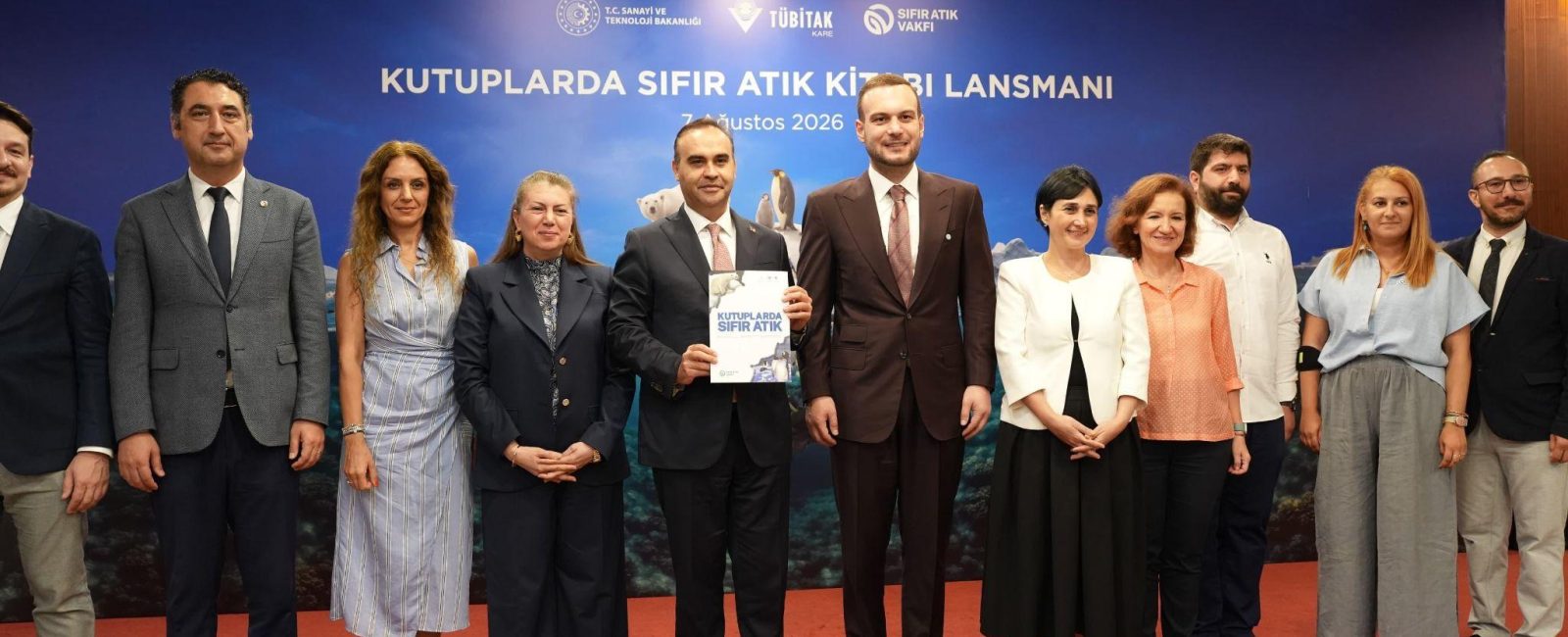
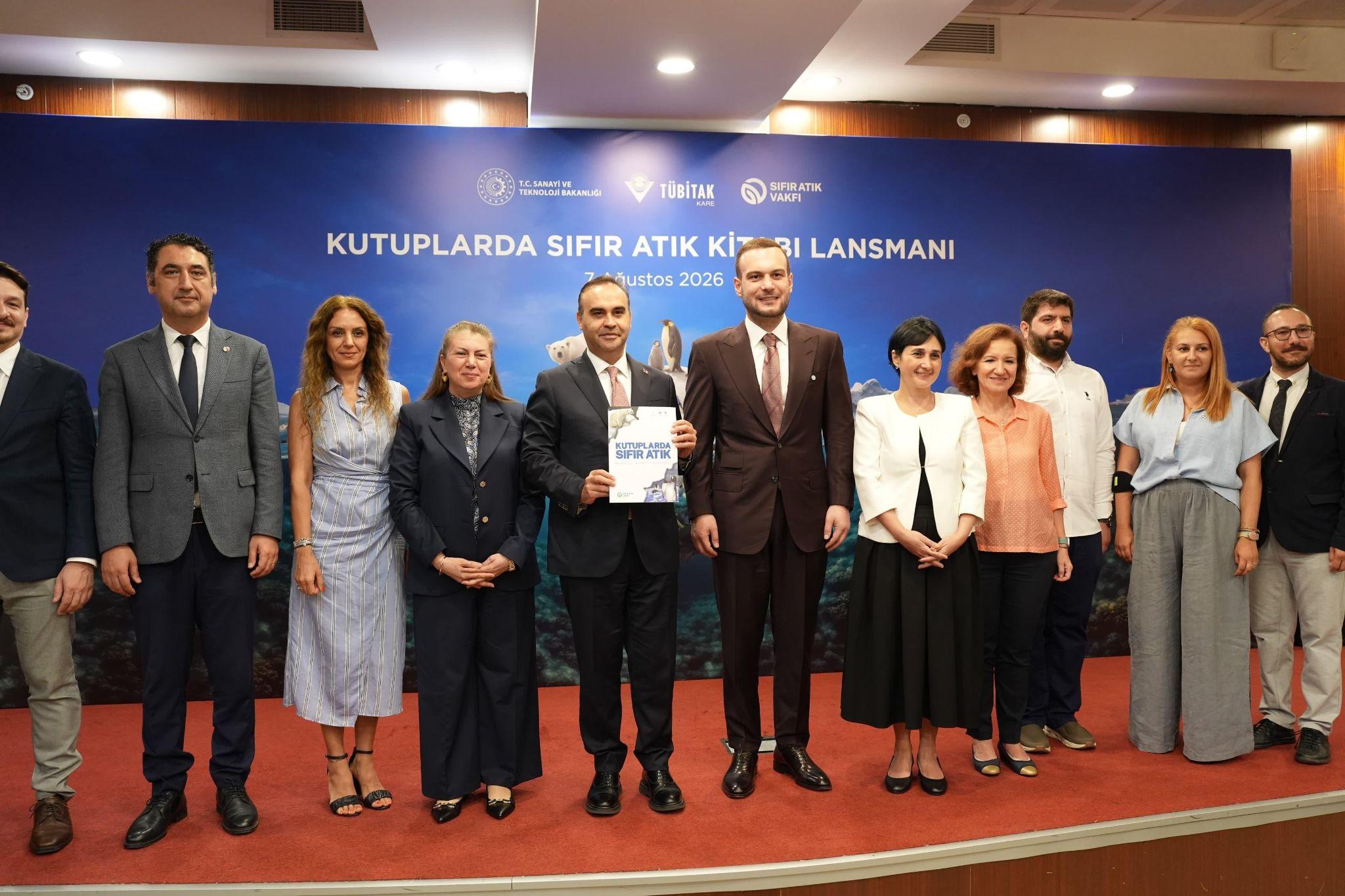
The book, “Zero Waste in the Polar Regions”, was launched on 7 August and brings together 18 articles written by scientists who have taken part in Turkish polar research expeditions. It was prepared with TÜBİTAK’s (Scientific and Technological Research Council of Türkiye) Polar Research Institute, and its scope goes beyond a simple record of fieldwork. The contributions cover the scientific, technical, administrative and communication dimensions of applying zero waste principles to research carried out in some of the planet’s most extreme environments, making it as much a study of research methodology as of environmental outcomes.
A curriculum built from field experience
For readers with an interest in how science is taught and communicated, the book’s structure is notable. Rather than focusing only on waste collection once it has been generated, the articles examine how scientific expeditions are planned from the outset, how materials and resources are selected and used, and how energy, water and logistics are managed throughout a mission. The underlying argument is that reducing waste before it occurs, and using resources efficiently, should be built into the design of research itself rather than treated as an afterthought.
The publication frames the polar regions as critical indicators of global climate change, arguing that environmental shifts observed there carry consequences well beyond the Arctic and Antarctic themselves. That framing is intended to give the work relevance to audiences and institutions far removed from polar geography, including universities and research bodies grappling with sustainability in their own operations.
The project also reflects the wider zero waste vision advanced by H.E. Emine Erdoğan, Founder of the Zero Waste Movement, Chair of the UN High-Level Advisory Board on Zero Waste and Honorary President of The Zero Waste Foundation. The Foundation describes the book as bringing together two national initiatives that both trace back to 2017: the Zero Waste movement and Türkiye’s programme of scientific expeditions to the Arctic and Antarctic.
Ministerial backing for a dual legacy
Mehmet Fatih Kacır, Minister of Industry and Technology of Türkiye, said the book united these two strands of national policy. “The Zero Waste initiative launched under the leadership of H.E. Emine Erdoğan has grown step by step from a national initiative into a global one,” he said.
He linked that growth to the parallel development of Türkiye’s polar science programme. “At the same time, we began organising scientific expeditions to Antarctica and the Arctic under the auspices of the President of the Republic of Türkiye, enabling Turkish scientists to strengthen the country’s presence in polar research. Through this book, these two initiatives have come together,” Kacır said.
For institutions training the next generation of environmental scientists, the minister’s comments underline a deliberate policy choice: treating resource efficiency not as a separate compliance exercise but as integral to how national research programmes are conceived and staffed. The involvement of TÜBİTAK’s Polar Research Institute, and the participation of 18 scientists as contributing authors, gives the publication a direct line to the researchers who have carried out the fieldwork it describes.
From the classroom to COP31
The book’s release was followed, ten days later, by a second development extending this work into an international setting. The Zero Waste Foundation and London Climate Action Week (LCAW) signed a cooperation protocol covering climate action, zero waste and the circular economy. The agreement establishes an institutional partnership aimed at strengthening knowledge exchange, joint initiatives and international dialogue on these themes.
The protocol was signed by Samed Ağırbaş, President of the Zero Waste Foundation and COP31 High-Level Climate Champion, and Climate Action Founder and CEO Nick Henry. “After this cooperation protocol, I hope we will carry out strong work and organize joint events at COP31 and London Climate Action Week,” Ağırbaş said.
London Climate Action Week brings together representatives from government, cities, business, finance, academia, civil society and local communities, giving the Foundation’s zero waste and circular economy work a direct connection to an international network with strong academic participation. That connection matters for institutions and researchers following Türkiye’s approach, since it signals that findings developed through national research programmes, including those documented in the new polar science book, are intended to feed into a broader international exchange of ideas rather than remain confined to domestic policy.
COP31, which Türkiye is preparing to host, provides the wider diplomatic backdrop to this cooperation, though the Foundation has stressed that the immediate focus remains on practical exchange between it and the LCAW network. Taken together, the polar science publication and the London partnership illustrate an approach that treats zero waste as a framework spanning scientific research, education and international policy, rather than reducing it to questions of recycling or waste management alone. For educators and researchers, the clearest takeaway may be the model itself: a national research institute, working with practising scientists, has produced a teaching and reference resource that is now being channelled directly into international climate forums ahead of a major diplomatic summit.