The Notting Hill Carnival 2026 street style photographs taken by Ollie Tikare for Dazed arrive at a charged anniversary: sixty years since the event took its present shape, and sixty years since the communities of west London decided that colour, music and collective presence could be an answer to something that had been very dark indeed.
The carnival ran this year from 29 to 31 August, drawing over two million people to the streets of west London across the bank holiday weekend. That figure alone marks the distance travelled from the original local fayre that Rhaune Laslett, a social worker, organised in the hope of bridging the fractured communities around Notting Hill.
Born from the riots: the history behind the celebration
The carnival’s origins are not a feel-good story of spontaneous joy, and understanding the clothes, the flags and the soundsystems requires knowing that. BBC News has reported that the carnival was born out of the race riots that shook Notting Hill in 1958 and 1959, and out of the murder of Kelso Cochrane, a carpenter, whose death crystallised the violence and the fear that had settled over the area’s Caribbean community. Vernon Williams, who moved to Britain from Trinidad and Tobago in the 1960s, was among those who helped found the carnival as a response: a deliberate, embodied counterstatement to hostility.
That context does not hover behind the celebrations as a distant historical footnote. It lives inside the gesture of dressing up, of choosing to take up space on a public street in a Jamaica flag worn as a headband or a crocheted beanie in the colours of a nation your grandparents left. Carnival costume, at its most considered, is an argument made with fabric.
Notting Hill Carnival 2026 street style: what Tikare saw
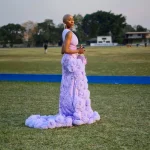
Tikare moved through the weekend hitting the soundsystems he describes as his usual spots: Channel One, Gladdy Wax and Aba Shanti. What he was looking for, and what he found, was the tension between the traditional and the inventive. ‘I was drawn to some in more traditional costumes,’ he says, ‘but it was those doing things with a twist that turned my head most.’
The inventory he offers is worth reading slowly: a multi-striped string T-shirt, yellow zebra leggings, retro rude boy hats, twins in matching yellow outfits, a crocheted beanie, a Jamaica flag repurposed as a headband. These are not looks assembled from a single rack. They are arguments about inheritance, about what you inherit and which parts you carry straight and which parts you bend.
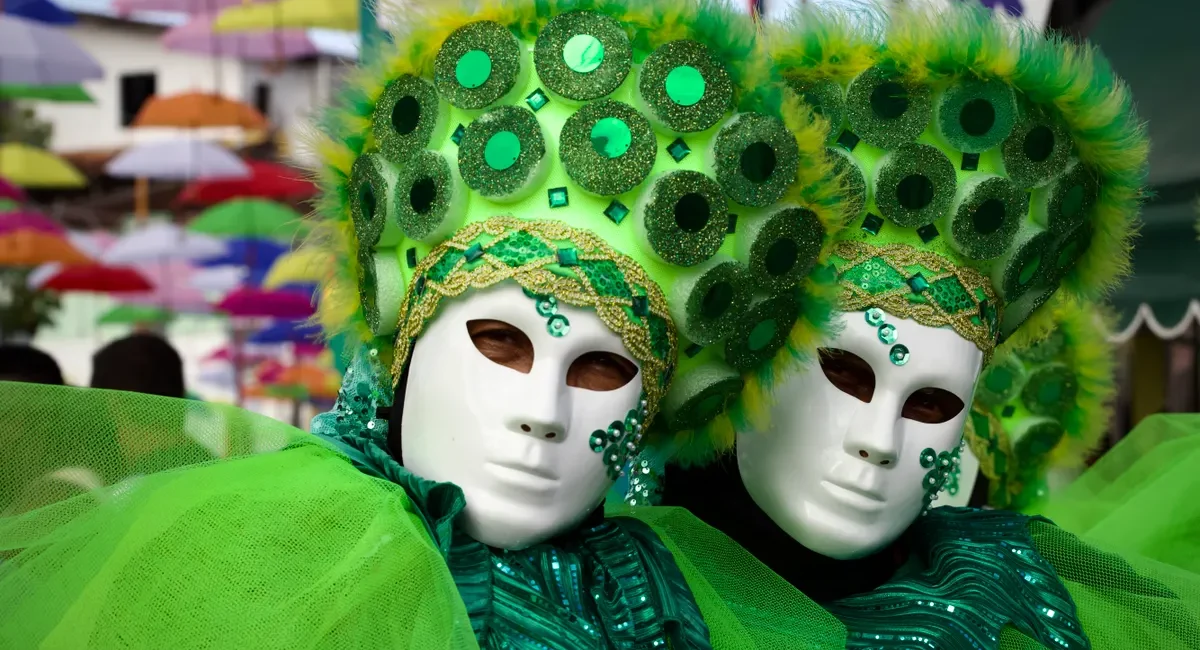
‘From Jab Jab to Mas, as well as the Caribbean nation flags, the streets are filled with carnival-affiliated attire,’ Tikare says. ‘For many, it’s an opportunity to honour their ancestry and celebrate the vibrancy and colour that glitters throughout much of Afro-Caribbean style.’ The photography bears that out: the images are less a street-style report than a portrait of a community in conscious, joyful self-presentation.
Soca, calypso, reggae and dub provided the sonic surround, with the food stalls offering curry goat and roti alongside the wearers of elaborate mas costumes. The Notting Hill Carnival has always operated as a total sensory event, and the dress code, such as it is, reflects that totality: there is no single look, only a broad, sun-drenched plurality.
What Tikare’s photographs register, taken together, is that the carnival’s style has never been about fashion in the narrow sense of what is new this season. It is about what endures, what gets handed down and then altered just enough to become yours. Sixty years in, that is still the gesture that defines the weekend: the inherited thing, worn with a twist.