
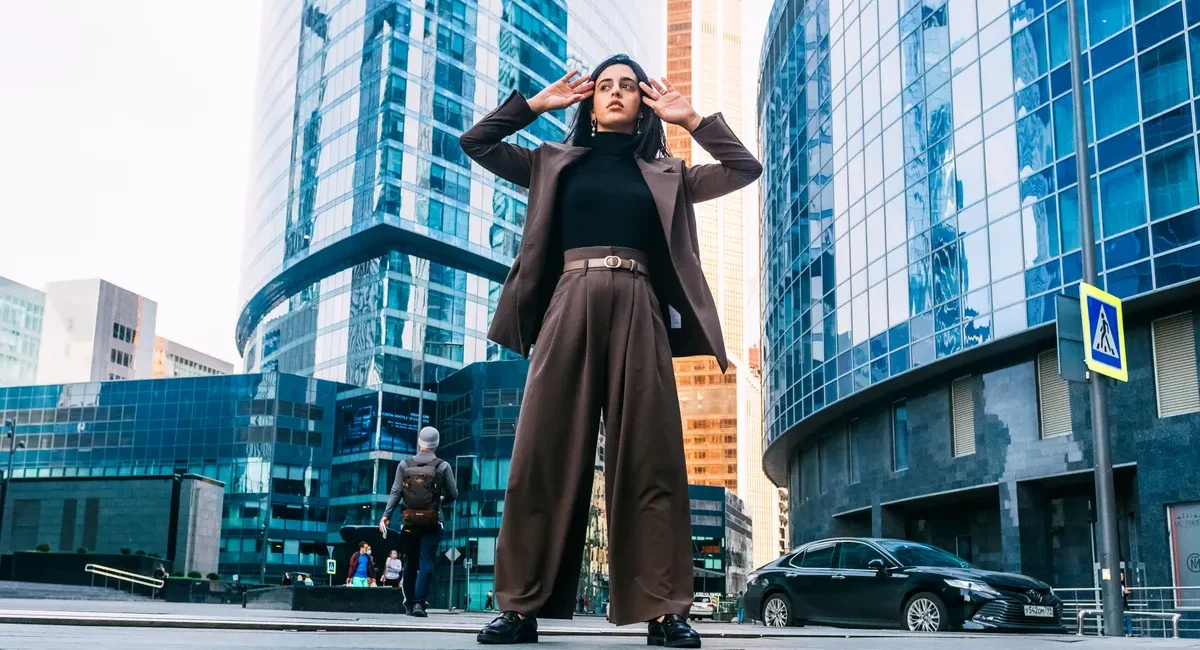
The LFW SS27 street style circuit proved, once again, that in London the pavement outside the venue is as considered a stage as the runway within it. The city has always dressed with intent, whether that intent is irony, provocation, or the quiet satisfaction of wearing something almost nobody else can find.
London Fashion Week has long operated on a dual logic: the shows inside and the theatre outside. This season’s SS27 edition was no different. While designers such as Kai Ghattaura, Chopova Lowena and Liza Keane were trafficking in a kind of structured anarchy on the runways, the guests assembling outside each venue were conducting their own parallel exercise in studied self-presentation. The hordes of photographers stationed at each entrance were, as ever, both evidence and incentive.
Slogans as Statements at LFW SS27 Street Style
The most discussed looks of the season were built around language as much as cloth. Several attendees chose slogan T-shirts as their vehicle, with the messages ranging from the fiscally subversive to the deliberately provocative: ‘EVADE TAXES’, ‘Cuntry’, and a ‘Make America Great Again’ shirt that earned its complexity by featuring the now-canonical 2006 photograph of Lindsay Lohan, Britney Spears and Paris Hilton together in the back of a car. The joke, if it is one, lands somewhere between cultural commentary and pure mischief, which is historically where London street style is most comfortable.
Artist Harry Freegard arrived wearing Princess Diana’s face on a T-shirt, a gesture that sits in a particular British tradition: the appropriation of royal iconography as a form of affectionate destabilisation. Diana’s image has circulated through fashion and art for decades, accumulating new meanings with each iteration. Worn on the street outside a fashion week venue in 2025, it reads differently from how it might have read ten years ago, or ten years before that.
The Recurring Motifs: Print, Technology and Archive
Beyond the slogans, certain patterns emerged across the season’s LFW SS27 street style. Leopard print was pervasive, with the inevitable reference point being Adriana from The Sopranos, a comparison that became literal when the character’s actress walked in the Natasha Zinko show. When a cultural reference colonises the street style and then steps onto the runway wearing itself, something has completed a circuit.
Headphones from Nothing appeared with conspicuous frequency, though rarely on anyone’s ears. Worn as bag charms, as necklaces, looped around handles and straps, they functioned as objects divested of their primary purpose and repurposed as jewellery. It is a familiar street style logic: the highest compliment you can pay a designed object is to refuse to use it as intended.
The bag story of the season was, by some distance, the most unexpected. Balenciaga‘s Le City, a shape long established in the brand’s archive, was spotted multiple times outside venues, not in standard colourways, but specifically in a blue ice cream print that retails for over £1,000 online and is, by most accounts, extremely difficult to locate. The fact that several people had independently sourced the same rare variant suggests either a very active resale network or a level of archival dedication that the street style circuit quietly rewards. In a season of loud statements, the Le City was the understated one, which is its own kind of statement.
London Fashion Week‘s SS27 edition, taken as a whole, confirmed what the city’s fashion culture has always proposed: that dressing is a form of argument, and that the argument is sharpest when it looks effortless.