
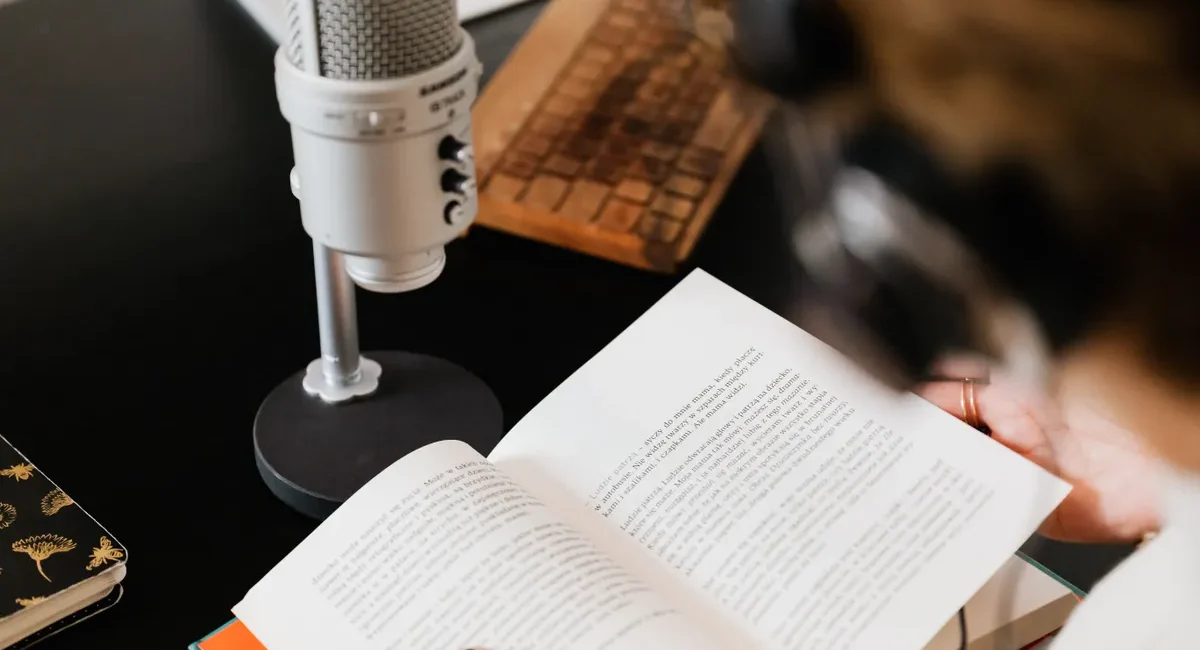
The Hinge No Ordinary Love audiobook has returned for a new chapter, and this time it arrives with a question that is harder to answer than most dating apps would prefer: what does it feel like to be brave before you know it is going to work out? The latest instalment pairs five writers with five real couples, each story built from the raw material of actual relationships, and the result sits somewhere between literary short fiction and a cultural argument about what we owe one another in the early, uncertain stages of love.
The story at the centre: Tembe Denton-Hurst on friendship and the grey space
Tembe Denton-Hurst, whose 2023 novel Homebodies established her as a writer interested in the textures of everyday intimacy, contributes ‘The Week We Were Friends’, a story following Isabella and Rebecca, a real couple who met on the app. The premise turns on a week of suspension: Isabella considers ending things, they agree to try friendship, and in that liminal pause (neither together nor cleanly apart) the story finds its subject. As Denton-Hurst put it in conversation with the writer Sasha Bonét, ‘with love, especially early love, there is so much nuance in the beginnings of getting to know somebody, and there’s a lot of little hiccups, little stutter steps that happen, and I think often we don’t really portray that.’ The quieter pauses, she suggested, are precisely what fiction tends to edit out.
What drew her to this particular couple was not the drama of their near-miss but the care inside it. Even without obligation, ‘they didn’t know each other and didn’t necessarily owe each other anything just yet’, they chose to be considerate. In an age that has normalised ghosting as a kind of emotional efficiency, that choice reads as something close to a moral position.
The other four stories in the collection are written and read by Nicola Dinan, Curtis Garner, Raven Smith and Rufi Thorpe. According to LBBOnline, Smith’s contribution is titled ‘Thou Shalt Play It Cool’ and details an honest conversation about dating other people, while Thorpe’s ‘This Is How to Touch Me’ takes a different register entirely: a humorous look at modern intimacy narrated by a cat. The range suggests a campaign that is at least trying to resist a single emotional key.
Hinge No Ordinary Love audiobook: the broader campaign
This is not the project’s first outing. As Inc. reports, Hinge first launched No Ordinary Love in 2024, and this new instalment sharpens the focus: the stories centre on the moments during which daters choose honesty over playing it cool. The audiobook is available for free on Spotify and Libby, as well as in text form on Substack, a distribution strategy that, in placing literary short fiction inside the same interfaces people use for podcasts and newsletters, makes a quiet point about where reading now lives.
For Bonét, who also teaches nonfiction, the conversation around the audiobook became a chance to articulate what courage actually requires in the context of love. She is precise about it: ‘I’ve had a baby alone, I’ve moved to a new city, I’ve done so many things that people say, “Wow, you’re so brave”, but there is nothing that has taken more courage than to commit to love, to commit to someone, to commit to myself even.’ The social performance of bravery, in other words, is one thing; the private act of remaining present in a difficult relationship is another.
Her advice to writing students runs on the same logic. ‘I always encourage my students to go exactly where they are running from,’ she told Denton-Hurst. ‘If you feel a lot of fear in writing about something, you’re exactly where you’re supposed to be.’ The connection between that instruction and the audiobook’s premise is not incidental: both ask you to stay in the room when everything in you wants to leave.
Denton-Hurst’s own account of long-term commitment (she and her wife have been together since she was 18) frames courage not as a single dramatic act but as a sustained practice. ‘It’s very brave in a lot of ways to make something concrete in those very young stages of your life,’ she said, ‘to commit to your own growth inside of that connection as well, not being subsumed by it.’ The distinction matters: the audiobook is, in the end, a collection of stories about people who chose not to be subsumed.
The five stories in the new No Ordinary Love are available now on Spotify, Libby and Substack.