
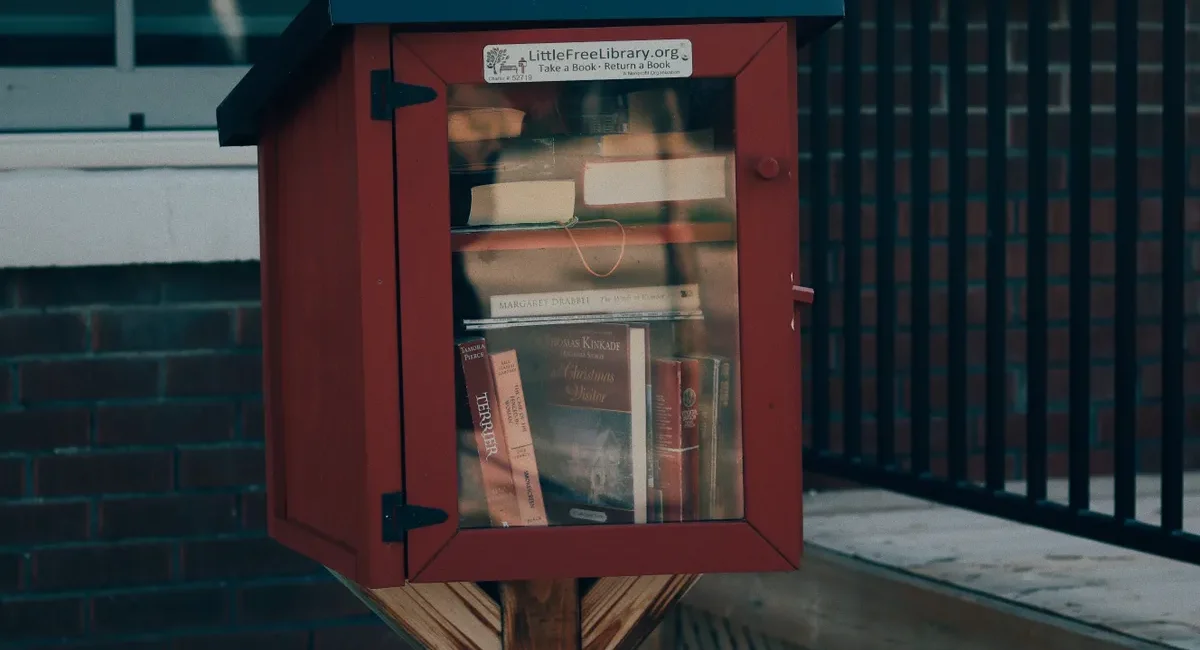
The Dolly Parton Imagination Library legacy, it turns out, was always about more than books. Parton, who died on 25 August, spent six decades building something that resists easy categorisation: a body of work, a public philosophy, and a set of concrete interventions in the world that outlasted every album cycle and chart position. The music was the vehicle. The life was the argument.
The argument went something like this: do more, say less, and never, under any circumstances, mistake the rhinestone for the fake and the diamond for the real. ‘I look totally artificial, but I am totally real,’ she told an interviewer. ‘A rhinestone shines just as good as a diamond.’ It is, on the surface, a line about sequins. On a second reading, it is a small piece of moral philosophy.
What the Imagination Library actually built
When Parton founded the Dolly Parton’s Imagination Library in 1995, the programme was designed to serve the children of her hometown in Sevier County, Tennessee. The premise was disarmingly simple: a free book, mailed directly to a child’s home, every month from birth until they started school. No application process beyond a postcode. No means test. A book arrives, and a child learns that books arrive.
What began in one Tennessee county has since expanded to five countries. The programme has now gifted more than 300 million free books to children across the United States, Canada, the United Kingdom, Australia and the Republic of Ireland, according to Dolly Parton’s Imagination Library. The scale of that number requires a beat of stillness to absorb. More than 2.6 million books are gifted each month, according to Penguin Random House. That is not a philanthropic gesture. That is infrastructure.
The Imagination Library sat alongside Parton’s other interventions: donations to disaster relief, healthcare college scholarships, and sustained investment in reducing school drop-out rates in her home county, which fell from 30 per cent to 6 per cent. Then there was her response to a devastating wildfire in her home county, where she introduced something resembling a universal basic income for those affected. None of it was announced with a political speech. Most of it was barely announced at all.
On not speaking out, and what that actually meant
This is where Parton becomes, culturally, a somewhat awkward figure for contemporary discourse to accommodate. She declined the ‘feminist’ label. She repeatedly stepped back from political endorsement. She told the Hollywood Reporter in 2023, in response to anti-trans legislation in Tennessee, that she tries ‘not to get into the politics of everything’ and preferred to ‘get into the human element of it’. She followed that by listing the range of people in her immediate circle and family, across every identity and every struggle, and saying plainly: ‘I know and love them all, and I do not judge.’
One YouGov poll found her approval rating in the United States at 65 per cent, against Donald Trump’s 19 per cent, Barack Obama’s 14 per cent and Taylor Swift’s 3 per cent. The number is extraordinary, but the more interesting question is why. Parton never attempted to be all things to all people in the usual political sense. She simply refused to treat people as abstractions, and she did things rather than performing the intention to do things.
She spoke about modelling herself as a teenager on a woman in her hometown known as the ‘town tramp’: flamboyant, red-lipped, unapologetically visible. ‘When people would say, “She ain’t nothing but trash,” I would always say, “Well, that’s what I’m gonna be when I grow up.”‘ The point of that story is not camp provocation. It is about declining to accept other people’s categories for what constitutes dignity or worth. That same refusal ran through everything: through the sequins and the wigs, through the decision to patent no song and lecture nobody, through 11 Grammy Awards and 25 number one singles built from original compositions that found, in the specific, something universally legible about heartbreak and labour and love.
The Imagination Library will continue operating after her death. More than 2.6 million books will go out next month, and the month after that. That, in the end, is what actions louder than words actually looks like when the arithmetic is done.