
There is a particular kind of cultural intelligence that belongs to people who have genuinely inhabited two places: not visited, not studied from a distance, but lived inside both until each leaves its mark. The Rejina Pyo Seoul guide that accompanies her new photography project is, in that sense, something more than a travel feature. It is a map of a sensibility.
Rejina Pyo was born and raised in Seoul. Her mother, an interior designer, taught her to sew; she went on to study fine art at Hongik University in the city. In 2008 she moved to London to take the MA Fashion course at Central Saint Martins, graduating in 2011 and remaining in the city, though she returns to Seoul every summer. The rhythm of that life, divided between London’s brutalist architecture and Seoul’s frenetic, layered streets, runs through her collections in ways she describes as almost involuntary. ‘The history of craft in Korea goes back centuries, and I think I absorbed that tradition without even realising it,’ she says. ‘There’s a discipline and perseverance to Korean craftsmanship which has influenced the way I design and paint.’
A new project and a Rejina Pyo Seoul guide in images
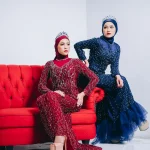
The immediate occasion for all of this is a collaboration with photographer Kerry J Dean: a series of images that places Korean women inside their own city, framed by Seoul’s often overlooked urban architecture. The effect is deliberate. Where most visual representations of Seoul reach for the polished and the spectacular, the project leans toward the raw, the structural, the unglamorous edges of a city that is simultaneously ancient and hyper-modern. The women in the images wear Pyo’s latest collection, and the contrast between their elegance and the unprettified backdrop does what good fashion photography rarely bothers to do: it makes you think about the city as much as the clothes. Pyo is also hosting a panel discussion during London Fashion Week in the coming days, but Seoul, right now, is clearly where her attention is.
What she offers as her personal guide to the city is, appropriately, a portrait in food as much as anything else. Korean cuisine, for Pyo, is inseparable from memory and place. Her first act on landing in Seoul, whatever the hour, is to go to her parents’ house, where her mother will have prepared jeon, savoury pancakes made with minced pork, tofu, mushrooms and prawns, coated in beaten egg and fried, alongside banchan side dishes, short grain rice and doenjang-guk, a soup made from fermented soybean paste. It is the kind of meal that is also a homecoming ritual, a recalibration of the self.
Where to eat, drink and wander
For eating beyond the family kitchen, Pyo points to Geodae Gomtang, the Seoul outpost of a Busan original, which serves a beef bone broth soup she describes as ‘truly one of the most restorative and nourishing dishes.’ For the single dish a visitor absolutely must try, she nominates dotorimuk-muchim: a seasoned acorn jelly salad dressed with soy sauce, garlic, honey, gochugaru dried red pepper flakes and roasted sesame oil, served with chrysanthemum leaves and crispy vegetables. ‘The jelly consistency can be a bit divisive,’ she concedes, with the measured pragmatism of someone who knows her audience, ‘but the sauce is so delicious.’ Her restaurant recommendation is Jaha Son Mandu in the mountains of north Seoul, a family-run place serving handmade Korean dumpling soup, with kong-guksu, a soybean noodle soup, available in summer, and hiking trails on Inwangsan mountain directly adjacent.
For drinking, Pyo gravitates toward Kiez for tequila and margaritas, names Seendosi as another favourite, and recommends Nyapi for anyone in need of a late-night electronic music basement. Her preferred accommodation divides along similarly considered lines: Rakkojae for a traditional hanok experience, Stayfolio for more contemporary bed-and-breakfast style stays.
Shopping, she says, means knowing which neighbourhood to be in. Hanam and Seochon are her choices for independent Korean brands and boutiques. The main street running through Seongsu, and the streets radiating off it, is where to find younger contemporary brands, though she adds a candid caveat: ‘It is very touristy and busy, so be warned.’ For a first date, Seoul Forest, bikes, the mirror lake, deer, table tennis, and then a small bar in Seongsu as the light goes, is the recommendation of someone who has clearly thought about what the city, at its best, actually feels like to be inside.
The one thing she would change is pace. Seoul’s ppalli-ppalli culture, the ‘quick, quick’ ethos that makes everything feel urgent and possible, is both the thing she would slow down and, she acknowledges, one of the things she loves most. Beyond the capital, she makes a case for the east coast beaches, 90 minutes from Seoul by bullet train, largely ignored by tourists who fly to Jeju instead, and running, she says, the entire length of the peninsula. The Rejina Pyo Seoul guide ends, in other words, not in the city at all, but on a coastline most visitors never reach.