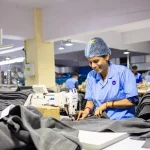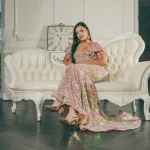
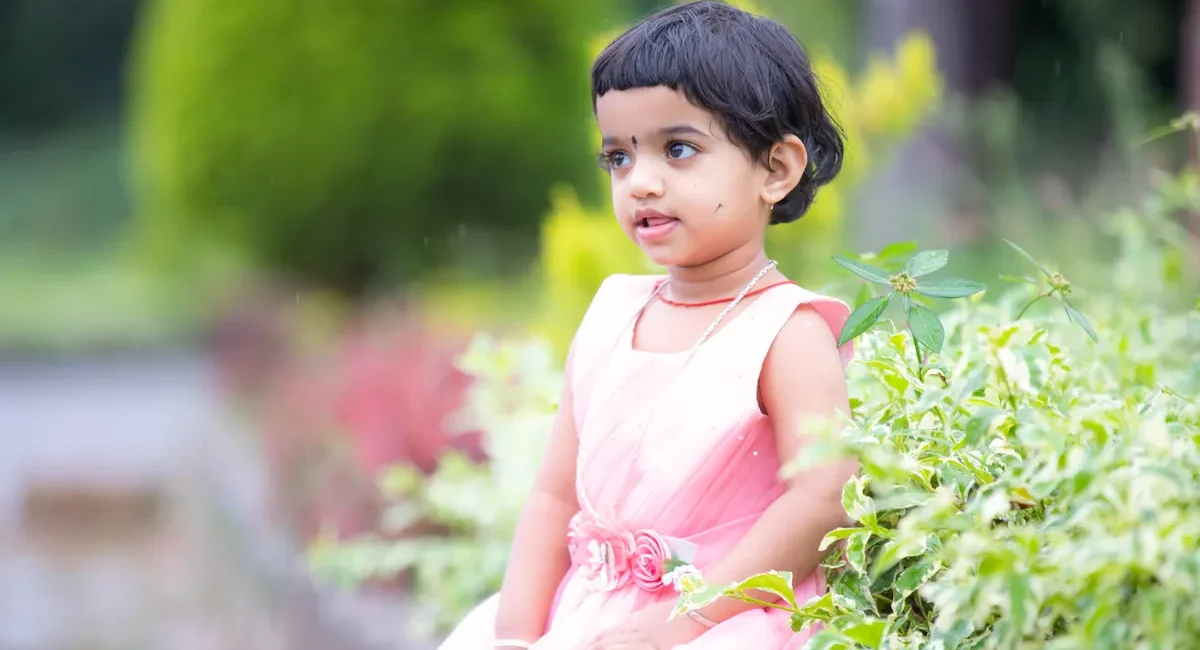
Eva Verbeeck America’s Girls, On the Edge of a Dream arrives on 25 September 2026, published by GOST, a six-year project and book that crossed 28 states and produced portraits of more than 400 girls aged between eight and 18. It is the kind of work that takes its time to explain itself, and that patience is the point.
Verbeeck grew up in Tessenderlo, a small farming town in northern Belgium, where America existed primarily as a projection. TV and films were limited at home; anything that did make it through was consumed intensely. She bought Britney Spears singles on CD, watched Christina Aguilera’s Dirrty tour, and waited for American magazines to arrive through friends and family who knew she wanted them. Pages from Vanity Fair, Vogue and Nylon were plastered across her bedroom wall. ‘I would rip it out, and I would paste it all over my wall,’ she says. ‘There was this real idea of escapism.’ Her teenage ambition, she admits freely, was to become a Hollywood actress. ‘I dreamt of that stuff.’
At 16, she finally went. Her father was travelling to the US for work, and Verbeeck and her brother joined him. In New York, she remembers the lights of Times Square, a diner, and the sheer volume of everything around her. ‘It was very different to where I’d grown up, and I found it all so exciting. It screamed so loudly.’
What Eva Verbeeck America’s Girls Asks of Its Subjects
Years later, having moved to the US herself, Verbeeck turned that accumulated fascination into a question rather than a nostalgic exercise. She had spent years looking at American girlhood from the outside; now she could examine it from within. ‘All of this fascination and escapism as a teenager aside,’ she asks, ‘what does it mean to be a young woman in the US now? What does it mean to be a young woman in this day and age?’
The methodology was deliberate and slow. Verbeeck worked through schools, sports clubs, youth groups, parents and community organisers, as well as open calls and local networks, to find her subjects. She was explicit about what she wanted to avoid: the curatorial instinct that says you are interesting, you are photogenic. ‘I didn’t want to go around and be like, “You’re cool, you’re interesting, I want to photograph you,”‘ she says. ‘That would give the project a very different feeling.’
She shot on 4×5 and 8×10 large-format film cameras, giving herself just two exposures per person, a constraint that changed the energy of each session. Beforehand, she would talk with each girl, sometimes asking them to complete questionnaires or record conversations about their lives, hopes and experiences. When it came to the portrait itself, she left the pose entirely to them. The large-format camera, slow and unfamiliar to a generation accustomed to photographing themselves constantly on iPhones, created what Verbeeck describes as something ‘really meditative in a way.’ There was no image to check after each shot. The moment had to be trusted.
Each girl was also invited to bring an object of personal significance. One arrived with a cast, three basketball trophies, a stack of books and around 20 medals. Another brought a complete baking outfit because she baked with her father. Another arrived carrying magazines, an echo, unplanned and precise, of the material Verbeeck had once covered her own bedroom with.
The Book’s Scale and What Comes Next
From that vast archive, 54 photographs were selected for the final volume, chosen, as about photography notes, for their individual strength and the emotional rhythm they create together. The physical object reflects that considered scale: iMusic lists the book at 128 pages, with dimensions of 358 × 296 × 18 mm, large enough to give the portraits the space they were made for.
Some of Verbeeck’s strongest memories from the project happened before or after the shutter was snapped. She recalls a group of teenage ballet dancers sitting together, writing about their experiences and their relationships with their bodies. ‘That moment felt really special to see young women together interacting like that,’ she says. ‘I remember looking at them and thinking, “Oh, all of us care about the same thing.” We all want to be seen and heard.’
That desire runs through the whole collection. The girls were not asked to represent a single version of American youth but to come with their own references, interests and contradictions. The uniforms, sports, school culture and visual codes are all there; so is everything that resists easy categorisation. Verbeeck hopes a photograph might remind someone of themselves, or perhaps a cousin or a friend. ‘Hopefully this book gives a little bit more nuance to the idea of what girlhood is and what it means for different people in the US.’
The book’s publication is accompanied by exhibitions on two continents. According to CNN, shows are taking place at Cultuurcentrum De Factorij in Belgium and the Savannah Center for Photography, one in the country where Verbeeck grew up pinning American images to her wall, the other in the country that produced them.