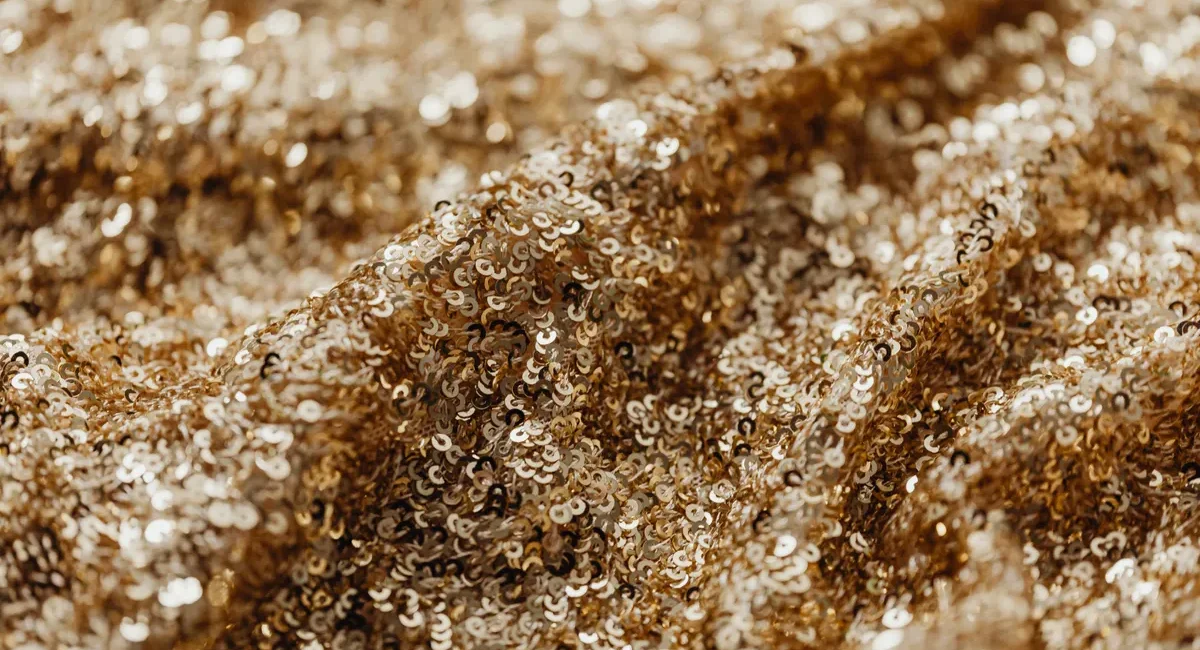
To understand Beyoncé B’Day era fashion is to understand a very particular theory of self-presentation: that the right dress, worn at the right moment, is not vanity but strategy. The album B’Day arrived in 2006, and with it came a run of looks (metallic, crystallised, fringed, occasionally PVC) that amounted to something close to a manifesto.
The manifesto had a text. ‘Cause when they act wrong,’ Beyoncé sang on the track ‘Freakum Dress’, ‘That’s when you put it on / This is your song / Hold out your back / Time to impress / Pull out your freakum dress.’ In 2006, the answer to life’s complications was the spangly minidress, and nobody lived that answer more literally than Beyoncé herself.
The album’s title was itself a private joke made public. According to Beyoncépedia Wiki, B’Day was named in reference to Beyoncé’s birthday, as the release week lined up with the week of her 25th birthday. A record timed to a birthday, built around a song about dressing up: the logic is almost too neat.
For much of the album cycle, the clothes came primarily from House of Deréon, the line created by Beyoncé’s mother. That this was not considered a limitation says something about the era’s different relationship to the distinction between celebrity-adjacent fashion and the European houses Beyoncé would later make her primary register. The B’Day looks did not need a Paris address to communicate. They communicated in sequins, in fringe, in structured metal corsetry.
The looks that built the Beyoncé B’Day era fashion canon
At the 2006 World Music Awards, she presented Michael Jackson with a lifetime achievement award, accepted the best R&B artist prize from Tommy Hilfiger, and performed a medley of ‘Déjà Vu’, ‘Ring the Alarm’ and ‘Irreplaceable’ in a crystallised geometric minidress. That she managed all three in a single evening is the kind of detail that belongs in the footnotes of cultural history.
The 2006 American Music Awards followed a similar logic: a bedazzled mini, diamantéd heels, most probably made in-house by the House of Deréon team. At the first anniversary party for Jay-Z’s 40/40 Club in Atlantic City, she deviated from the metallic theme just enough to prove she could, before returning to form.
The 2007 Golden Globes produced what is perhaps the era’s most formally ambitious moment: a showstopping golden Elie Saab gown, one of the rare occasions during this period when she reached for a European house. The gesture registered precisely because it was exceptional. At the 2007 BET Awards, the exception came again: a silver Dolce & Gabbana dress with 70s-inspired sleeves and a structured metal corset, worn in an era otherwise defined by the in-house approach.
The 2006 VMAs delivered a different register of freakum entirely. For her performance of ‘Ring the Alarm’, Beyoncé descended wearing a gabardine trench coat dress designed by her mother, which she then removed to reveal a leopard corset and PVC hotpants. The reveal-within-a-look would become a recurring structural device: for The Beyoncé Experience world tour in 2007, she performed in a floor-length silver gown before ripping away the lower half to expose the mini beneath. The freakum dress, it turned out, could also be inside another dress.
The number that started it all
The canonical peak, though, is the 2006 BET Awards performance of ‘Déjà Vu’. Technically it was a two-piece rather than a dress, but the silver fringed mini and halter top set achieved something the other looks approached but rarely equalled: a complete collapse of the boundary between costume and choreography. By the time Beyoncé moved from commanding the stage to the floor, the outfit was no longer something she was wearing so much as something she was performing.
Twenty years on, the B’Day cycle reads as the moment before the full consolidation of Beyoncé as a figure inseparable from high fashion institution. What it offers instead is something less curated and, in its own way, more instructive: a sustained argument that clothes are not decoration but declaration, and that the freakum dress is its own complete sentence.