
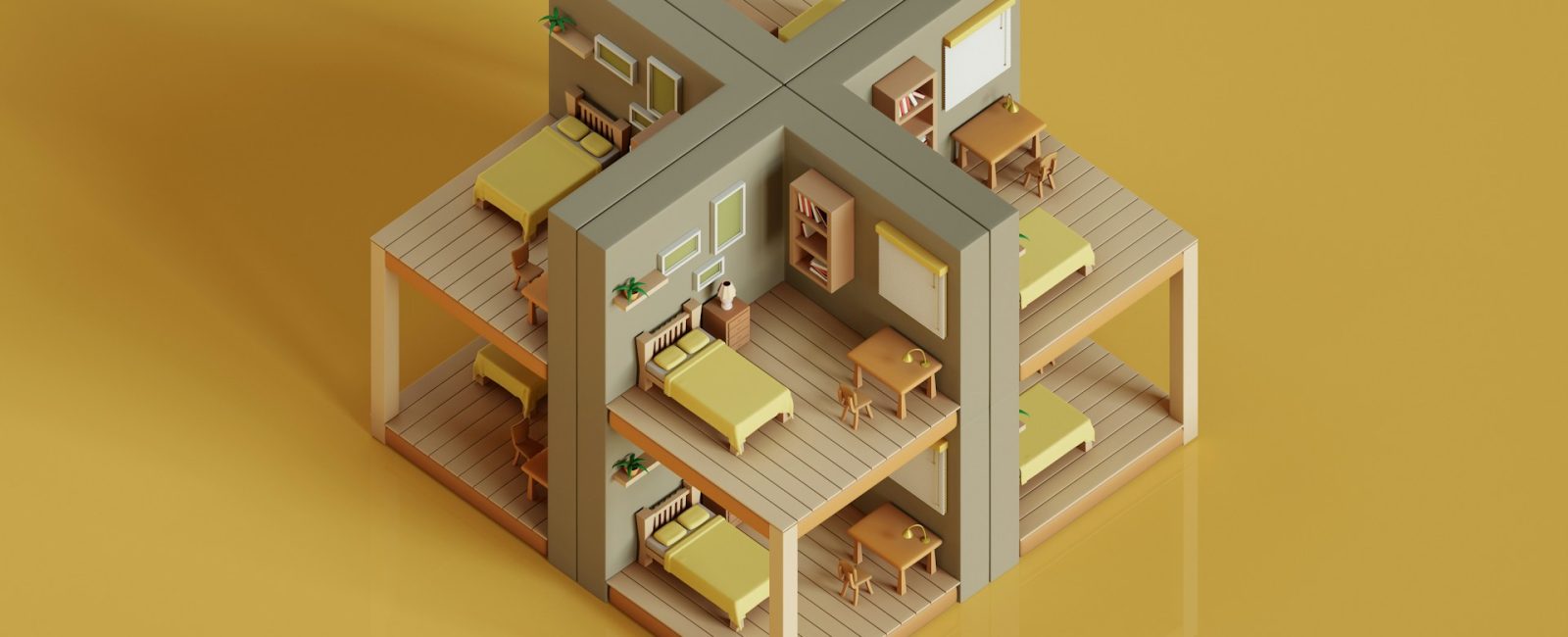
The UK rental market has changed dramatically, and for landlords thinking strategically, Houses in Multiple Occupation remain one of the most profitable asset classes available. A well-executed HMO conversion can generate yields two to three times higher than a standard buy-to-let — but the difference between a good return and an exceptional one often comes down to decisions made before a single tenant moves in. Design, room layout, and living standards determine not only achievable rents, but how quickly rooms fill and how long tenants stay.
Understanding What Drives HMO Yield
The economics are straightforward: a four-bedroom house renting as a whole might bring in £1,200 per month, but the same property converted into five or six individual rooms can yield £2,500–£3,500 or more. The key variable most landlords underestimate is the room rate premium. An en-suite room commands significantly more rent than one sharing facilities. A room with built-in storage and a proper desk attracts working professionals who stay longer. A well-fitted kitchen reduces void periods to near zero. Every design decision either adds to or subtracts from your achievable rent.
Room Layout: Making Every Square Metre Work
Modern HMO tenants — young professionals, students, key workers — spend a significant portion of their time in their rooms. The bedroom is a home office, a relaxation space, and a private retreat. This means how space is used matters as much as raw size. A 12 m² room with fitted furniture, good lighting, and smart storage can feel more liveable than a 15 m² room furnished lazily. Floor-to-ceiling wardrobes, a built-in desk with cable management, and under-bed storage reduce clutter and signal quality to prospective tenants.
Where structure allows, adding en-suite shower rooms is among the highest-return investments available to HMO landlords. The cost — typically £3,000–£6,000 per room — is usually recovered within 12 to 18 months through higher room rates alone, and it fundamentally changes the tenant profile you attract. Natural light matters too: rooms with larger or added windows consistently achieve higher rents and lower void periods.
Communal Spaces: The Hidden Engine of Profitability
Many landlords invest in individual rooms and then furnish communal areas as an afterthought. This is a significant mistake. The kitchen is what tenants show friends and what appears first in listing photos. A professional-standard kitchen with generous worktop space, sufficient fridge and freezer capacity, a dishwasher, and modern appliances will make your property stand out in almost any market. Budget £5,000–£12,000 for a kitchen that genuinely impresses — shared across all rooms, the per-room cost is modest.
Bathrooms should be clean, modern, and sufficient: one per three or four tenants is the accepted minimum, but moving toward one per two tenants puts your property in a different category entirely. Whether to retain a communal lounge depends on your market: for professionals who value community, a well-designed lounge justifies premium rents and reduces turnover.
Modern Living Standards: What Tenants Actually Expect
High-speed broadband is now a baseline expectation, not a selling point. Wire the property so every room has a stable signal via ethernet ports or well-placed WiFi access points — tenants who work from home will not tolerate patchy internet. Energy efficiency has also taken on new importance: good insulation, an efficient boiler, and smart heating controls attract cost-conscious tenants and support bills-included pricing that simplifies management.
Laundry facilities, smart entry systems, USB charging sockets, and a maintained outdoor area are amenities tenants notice during viewings. None are expensive individually, but together they create the impression of a thoughtfully managed property — one worth paying a premium for.
Design: Make It Feel Like a Home, Not a Hostel
There is a persistent temptation to furnish HMOs in a utilitarian style — magnolia walls, flat-pack furniture, the cheapest carpets. The problem is that this reads immediately as temporary and impersonal, attracting tenants who treat the space accordingly. A considered design approach does not require a large budget; it requires intentionality. Choose a coherent colour palette, invest in a few quality statement pieces, and add artwork and soft furnishings that make the property feel inhabited. Properties that photograph well attract more viewings, meaning faster lettings and less pressure to reduce asking rents. Professional photography costs a few hundred pounds and pays back many times over.
Conclusion
Maximising HMO income is a value-creation exercise, not a cost-cutting one. The landlords achieving the strongest yields are those who have built properties that genuinely serve modern tenants: well-designed rooms, functional communal spaces, reliable technology, and a finish that signals quality. The investment required to move from basic to premium is meaningful but not prohibitive — and the return, in higher rents, fewer voids, and better tenants, is almost always substantial. Build for the tenant you want to attract, and the income will follow.