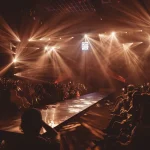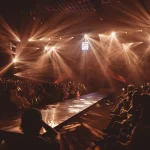
The Fashion East SS27 designers did what the incubator has always done best: took over a corner of south London that the fashion calendar would otherwise ignore and made it feel like the only place worth being. Manor Place was the venue again this season, and the front row assembled accordingly, Central Cee, Paloma Elsesser, Sabrina Elba and Miquita Oliver among them, which is either a sign of the programme’s cultural reach or of how effectively a good guest list pre-edits a room.
Three collections, three very different registers
The Fashion East SS27 designers this season numbered three: newcomer Mé Mé, returning talent Jacek Gleba, and Traiceline Pratt’s GOYAGOMA, who closed the show. Two were returning; one was making a first appearance on this particular stage, having arrived directly from graduate education. The format, as ever, compresses several distinct worlds into a single afternoon, asking showgoers to recalibrate between collections without pause or apology.
Mé Mé opened. A recent Central Saint Martins MA graduate, the Cantonese designer had caught industry attention with their graduate collection, one of twenty-one shown at the CSM MA Fashion SHOW 2024. The judging panel for that occasion, which included Tian Wei Zhang, Julia Sarr-Jamois and Osman Ahmed, according to TEXINTEL, was not short of relevant authority. For Fashion East, Mé Mé built on those foundations rather than departing from them, and the result was one of the more coherent debut shows the programme has staged.
The collection paid tribute to women of 1980s Hong Kong, those figures perpetually in motion around the city, and the details were specific enough to earn the reference. Models wore birdcage veils over their eyes, bowls upturned as hats, and bubblegum pink bloomers, stomping through clouds of cigarette smoke, or rather, through the stiff white netting Mé Mé deploys as a convincing illusion of it, since the Marlboros the models were puffing were fake. Look closely at the headpieces and you found dead flies, and more glued onto the models’ faces: a nod, the designer noted, to flies around restaurant dishes, the sink left unwashed, the textures of domestic life rendered strange by proximity. It landed somewhere between Ladies Day at Ascot and a nightclub smoking area, which is not as contradictory as it sounds, both involve a particular kind of performance, a particular relationship between display and transgression.
Gleba’s chiffon and Pratt’s life jacket
Jacek Gleba’s collection arrived next, and if Mé Mé’s work operated through accumulation of detail, Gleba’s operated through a long, slow subversion of a single idea. Inspired in part by the choreographer Pina Bausch and in part by Denton Welch’s 1945 novel In Youth is Pleasure, the collection worked masculinity over with delicate chiffon, pastel hues, cascading backless tops and heeled ballet pumps. Boys wore floating dresses; lace appliqué decorated the lines of silk shirts. The ballet world has always been a site of rigorous gender coding, and Gleba knows exactly what he is undoing when he borrows its vocabulary.
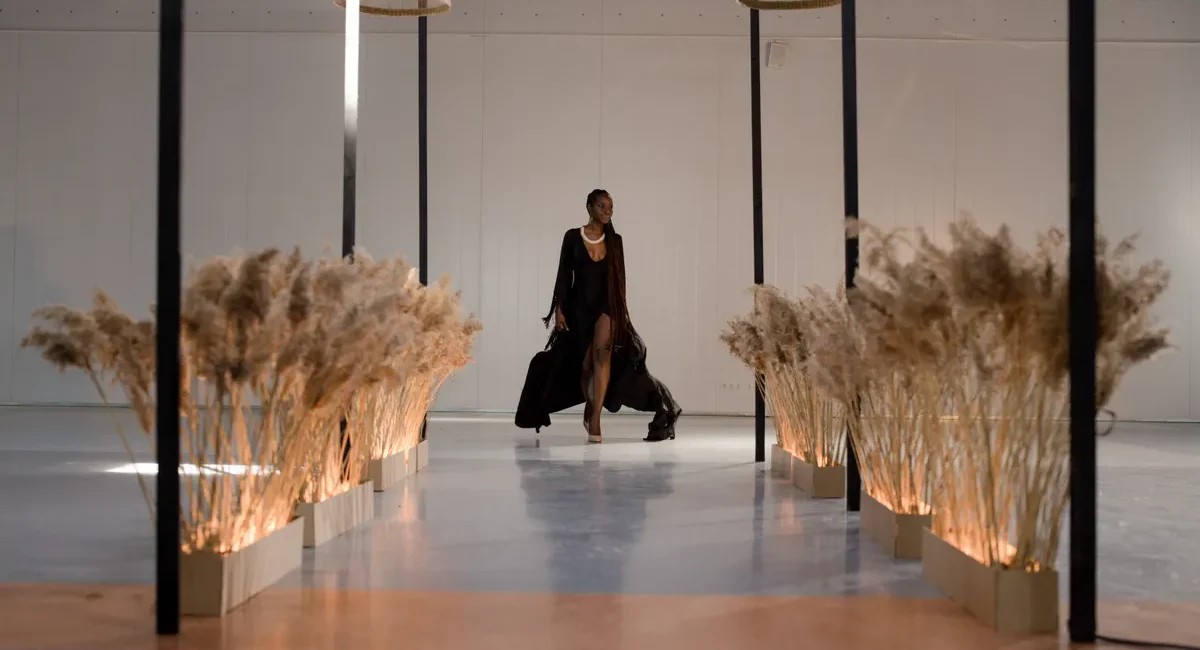
Traiceline Pratt’s GOYAGOMA closed the show, the only collection Central Cee reached for his phone to film, which is its own kind of review. The Bahamas-born designer turned this season to workwear and to the wardrobes of his own parents: his mother’s dressing gown and his father’s daily office attire were both reinterpreted, translated into something that felt at once intimately known and newly considered. An inflated life jacket was the standout piece, its reference made explicit through the Luther Collie quote the designer cited: ‘No one’s coming to save you; it’s either you sink or swim.’
The quote is doing something more than motivational freight. For a designer working within a programme built to support emerging talent before the industry can make the economics work for them, the gesture of wearing your buoyancy device on the outside carries a particular weight. Pratt’s third appearance at Fashion East suggests he has little need of it, but the instinct to keep it visible, to name the precarity rather than conceal it, is what makes the work feel like more than fashion.