
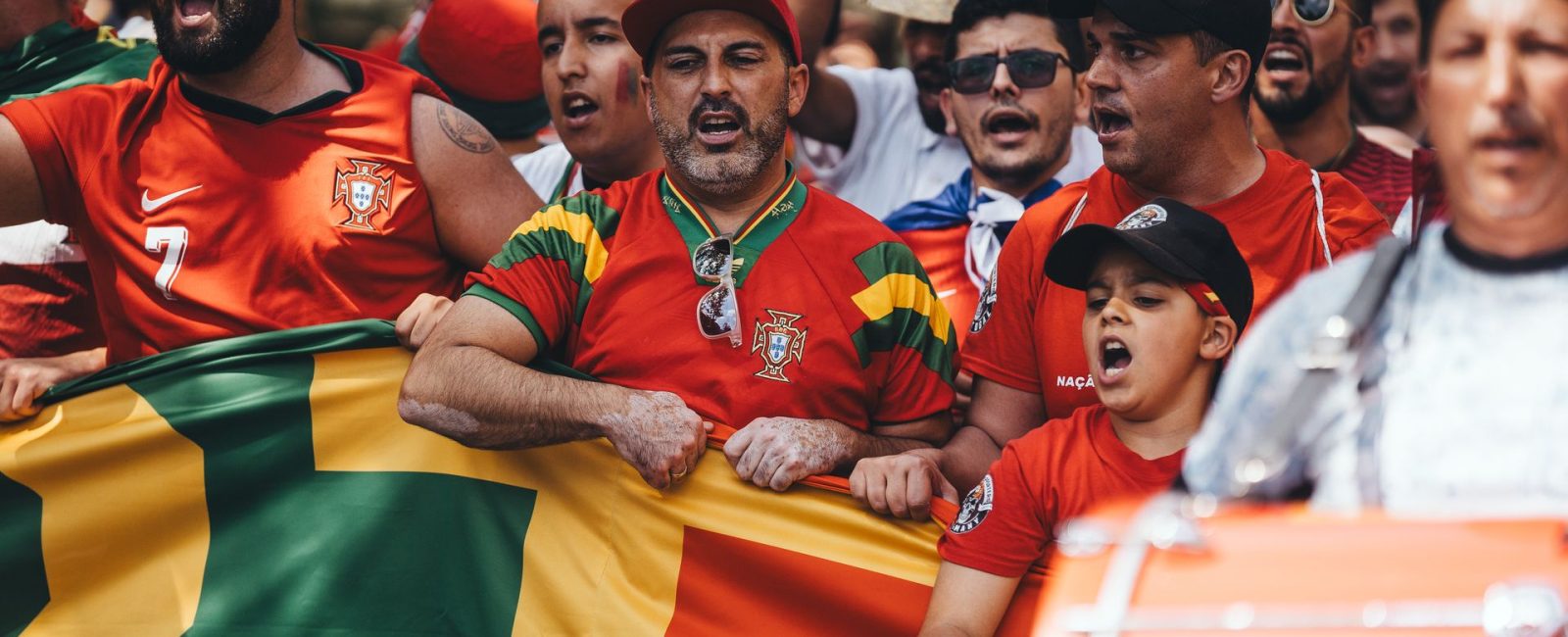
For most supporters, football is built around a club. The weekly routine of travelling to matches, checking team news and arguing about selections gives the sport its rhythm, and loyalty to a club often runs through families for generations.
Yet international football keeps a firm hold on the same people. Supporters who spend months cheering one badge and resenting another will happily gather behind a national team, often alongside the very fans they were mocking a few weeks earlier.
That apparent contradiction says a great deal about why the international game endures. It offers something club football cannot, and many fans value it precisely because it feels different.
A Loyalty That Sits Above the Club
Club allegiance is chosen, inherited or shaped by where someone grew up. National allegiance feels broader, tied to identity, place and a sense of belonging that stretches well beyond any single stadium. When a national team plays, supporters of rival clubs are briefly on the same side.
That temporary truce is part of the appeal. Anyone who follows the latest football news will know how bitter club rivalries can become, with every refereeing decision and transfer rumour picked apart. International matches offer a rare setting in which that tension is set aside for a shared cause.
There is also a civic quality to international football. Pubs, workplaces and living rooms fill with people who might not normally watch a match, and conversations about the national team reach far beyond the usual football crowd.
Seeing Familiar Players in a New Light
One of the quieter pleasures for club fans is watching their own players represent their country. A player who is taken for granted every week can suddenly look different in a national shirt, carrying the hopes of millions rather than one set of supporters.
Pride plays a big part in this. Supporters often take a personal interest in how many of their club’s players are selected, treating each call-up as recognition of their team’s quality. When a player from a smaller club earns a place, their fans can feel that the whole club has been noticed.
International football also puts players in unfamiliar combinations. Club rivals become team-mates, players are asked to fill different roles and tactical systems change completely. For fans who enjoy the detail of the game, this offers a fresh perspective on players they thought they knew well.
Tournaments and the Memories They Create
Major tournaments hold a special place in football culture. They come around less often than club competitions, which gives them a sense of occasion that a regular league fixture rarely matches. The long wait between them adds weight to every match played.
Many supporters can trace their love of football back to a particular tournament. A summer spent watching matches with family, a memorable goal or a painful exit can stay with people for decades, and those memories are often shared by an entire generation rather than a single fan base.
Tournaments also bring in younger fans. Children who have not yet picked a club often start with the national team, collecting stickers, copying goal celebrations and learning players’ names. For many, international football is the gateway into the sport as a whole.
A Window Onto the Wider Football World
Club fans tend to focus closely on one league, but the international game broadens the view. National teams bring together players from many different leagues and countries, introducing supporters to talent they might never otherwise watch closely.
This has practical as well as cultural value. Supporters often spot players during international matches who later become transfer targets, and a strong display for a national team can shape how fans view a potential signing. Smaller nations, meanwhile, offer stories of underdogs that club football, with its financial gaps, struggles to replicate.
The structure of international football has continued to evolve, with the FIFA Council deciding in 2023 to reshape the calendar, partly to reduce the amount of travel players face. Whatever form the windows take, they remain the main opportunity for supporters to see different footballing styles and traditions meet on the pitch.
That variety is a large part of the attraction. Different countries approach the game in their own ways, and seeing those contrasts play out reminds fans that football extends well beyond their own league.
Why the Connection Endures
International football is sometimes criticised by club supporters, and frustrations about timing or player welfare are understandable. Even so, the national game rarely loses its emotional pull, because it speaks to something wider than week-to-week results.
It links fans to their communities, to their own football memories and to supporters they would otherwise see as rivals. That combination is difficult to replace.
Club football will always be the centre of most supporters’ lives, but the international game offers a different kind of meaning. It brings people together around shared identity and memory, and that is why it continues to matter so much, even to the most devoted club fan.