There is a particular ecology to Rat Party, the Leeds rave co-founded by Naomi Momoh, and it begins, appropriately, with vermin. The streets around Hyde Park, where Momoh and her collaborators lived as students, were, as she tells Dazed, ‘notorious for these mutant rats.’ The name was not ironic so much as honest. ‘Rats are outsiders,’ Momoh says, ‘and that’s how we felt at the time.’
That outsider instinct turned out to be precisely the right foundation for a club night. Rat Party began in 2020, during the first COVID lockdown, when clubs were shut and the impulse to gather had nowhere legitimate to go. The solution was to gather anyway: in forests, under motorway bridges, in whatever West Yorkshire terrain was available. ‘We missed our friends and our community,’ Momoh says, ‘and used this as a way to bring everyone we loved back into one space.’ More than six years on, Rat Party has become one of Leeds‘s most talked-about underground raves, a night that began in muddy fields and has since travelled south to London, carrying its community with it.
Rat Party Leeds rave: from forest clearings to the capital
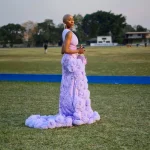
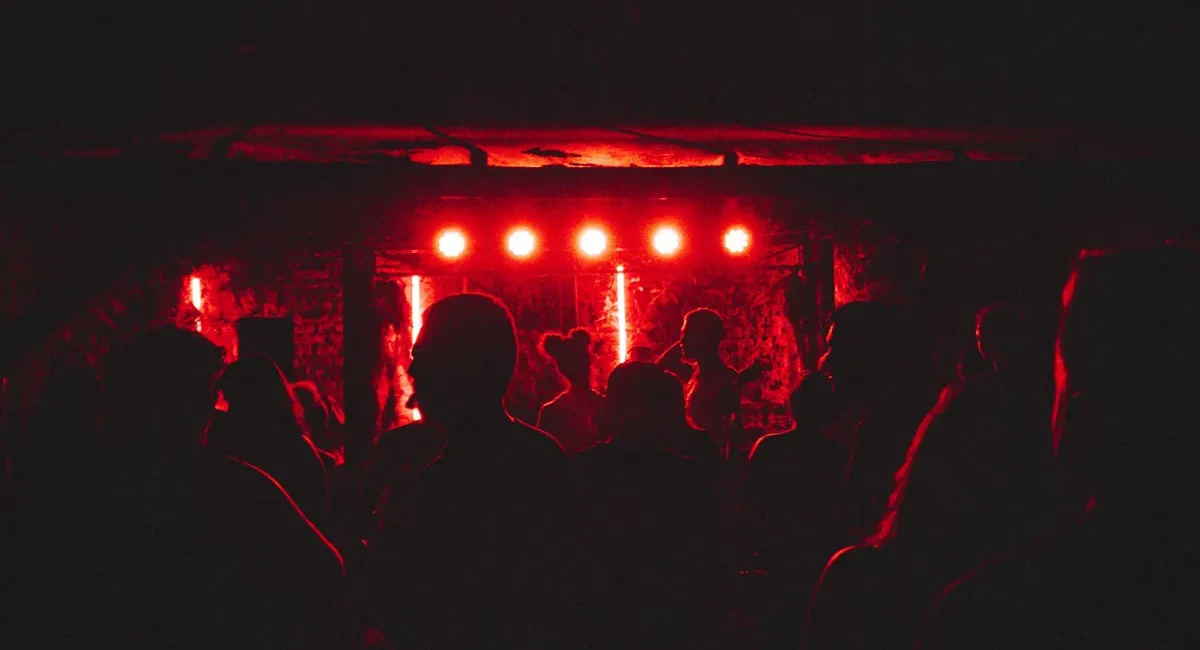
The trajectory from illicit outdoor gathering to established fixture on the queer nightlife circuit is, in itself, a kind of argument about what underground culture actually does. It does not simply fill the absence left by mainstream spaces; it generates new forms of sociability, new aesthetics, new rituals. At Rat Party’s most recent London edition, this was visible in the crowd: attendees arrived in skimpy vests, slinky underwear and see-through dresses, some carrying bags so they could change in and out of looks across the course of the night. ‘Some people bring bags with them and slip clothes on and off like chameleons,’ Momoh observes.
That chameleon quality is, in Momoh’s account, inseparable from what makes the night work. ‘Dancing, freedom and last minute fashion,’ she says, when asked what distinguishes Rat Party from comparable events. Fashion here is not decorative; it is procedural. ‘Fashion as a form of self expression is super important at club nights. We see people come and go and evolve throughout the night.’ The evolution is literal: the person who arrived is not quite the person who leaves, having tried on and discarded several versions of themselves between the opening DJ set and last orders.
The slow education in self-expression
In the early outdoor editions, the logic of dressing was necessarily practical. People were, as Momoh puts it, ‘trekking out to muddy terrains,’ and their clothing reflected that. But as Rat Party moved indoors and built a loyal following, something shifted. ‘You can really see how as time goes on, the more you attend Rat Parties the more comfortable you feel in trying to look and dress differently,’ Momoh says, ‘pushing self-expression in ways that other spaces don’t allow.’
That phrase (‘other spaces don’t allow’) is the crux of the thing. It points to the specific social permission that certain queer club nights extend, the sense that the usual risks attached to dressing experimentally or erotically or just very strangely are suspended. The club becomes a space of rehearsal, where the self can be tried on in different configurations before anyone has to commit to wearing it home.
Rat Party has, in that sense, always been about more than nightlife strictly understood. The rats of Hyde Park, the motorway bridges, the forest clearings, the London migration: these are all versions of the same gesture, which is the gesture of claiming a space that was not designed for you and making it do exactly what you need. ‘Seeing old and new faces at each party shows our growth,’ Momoh says, ‘and that we’re getting something right to keep people coming back for more.’
The most recent London edition of the Rat Party Leeds rave saw the night’s Leeds community travel south in force, appearing alongside new faces from the capital’s own queer nightlife scene. Momoh notes that the Leeds contingent ‘consistently’ makes the journey for the London events, a small but concrete sign that what began under a motorway bridge has developed the kind of gravity that pulls people across National Rail timetables and out of their usual postcode.