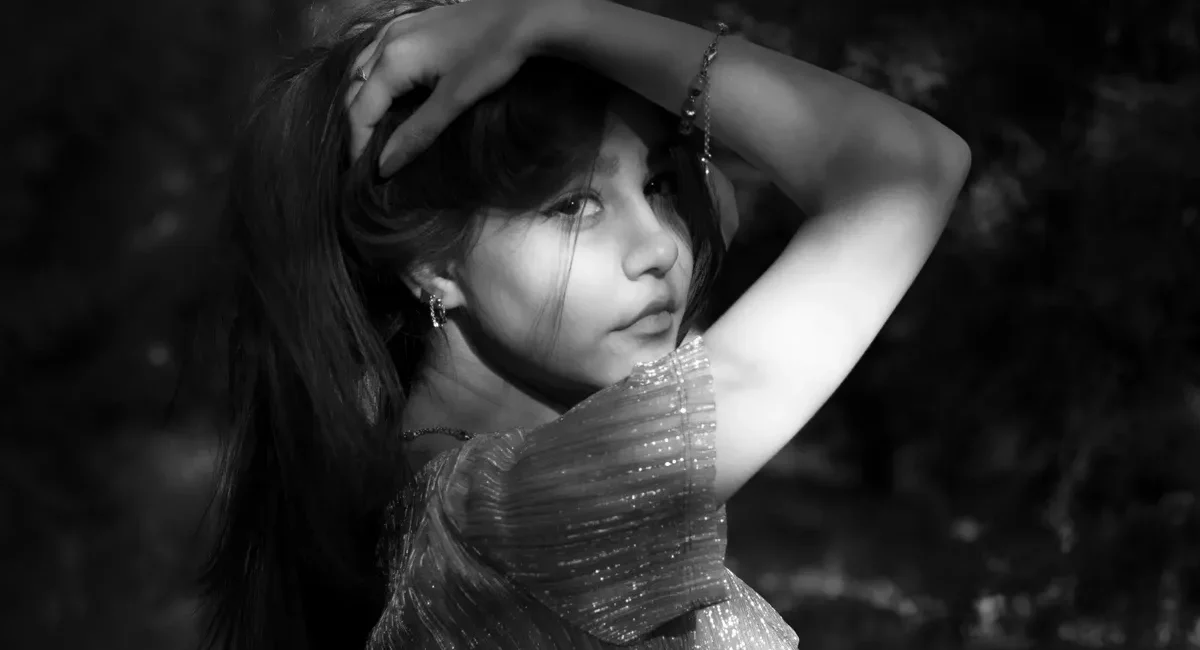
The images were made for stillness. On 13 August, Eva Longoria and Brian Bowen Smith delivered a set of black-and-white portraits via Longoria’s Instagram, a carousel of unseen photographs that leaned hard into a particular mood: bedroom, monochrome, and unhurried.
The shoot has been circulating with the expected commentary about Longoria’s appearance, but the more interesting thing is the register it is working in. Black-and-white photography does specific work. It strips colour from the equation, which means it strips the noise of trend, of season, of the particular cultural moment a shade or palette might signal. What remains is form, texture, light. The choice to release these images now, through a social media carousel rather than a magazine editorial, suggests something about how celebrity self-presentation operates in 2024: the controlled intimacy of an Instagram post now carries as much weight as any glossy spread.
The Aesthetic of the Eva Longoria Brian Bowen Smith Portraits
In the photographs, Longoria lounges in bed wearing a fitted white ribbed tank top with a thick binding around a scoop neckline and deep-cut armholes. She appears to be wearing nothing else. The styling is minimal by design: long hair in voluminous, tousled waves with curtain bangs, make-up that the report describes as ‘classic glam’, dark liner, fluttery lashes, sculpted cheekbones. The contrast between the casual informality of the setting and the precision of the make-up is where the image lives. It is a studied nonchalance, and nonchalance, in fashion photography, always requires a great deal of effort.
The ribbed tank top itself is worth a moment. The ribbed knit has had a sustained presence in recent years as a garment that hovers between innerwear and outerwear, between the private and the public. Worn as the sole upper garment in a bed-set photograph, it does double duty: it reads as intimate and as fashion-forward simultaneously. The scoop neckline and the deep armholes extend that ambiguity, more structure than a simple vest, but nowhere near the formality of a blouse. The garment says: this is not an accident.
Brian Bowen Smith and the Grammar of the Monochrome Portrait
Brian Bowen Smith’s name matters here. The collaboration between a subject and a photographer is never neutral: the choice of who shoots you is itself a statement. A carousel of ‘unseen portraits’ released months or years after a shoot implies a reserve stock, images held back and then deployed. The timing of their release, and the platform chosen for it, are editorial decisions as deliberate as any magazine layout.
Monochrome portraiture in this mode has a long lineage, think of the classic Hollywood still, the controlled intimacy of a Richard Avedon sitting, the way black-and-white insulates an image from the datedness that colour can impose. Whether or not those references are consciously invoked, they are present in the grammar of the image. A white ribbed tank top in full colour is a garment. In black and white, against rumpled bedding, with that make-up, it becomes something closer to a costume in the theatrical sense: deliberate, composed, performing a version of ease.
Fans commenting ‘So beautiful,’ ‘Magnificient Eva,’ and ‘You are stunning Eva’ in the replies were responding, whether they knew it or not, to a collaboration between two people who understand exactly what that grammar can do. The images are quiet. The Eva Longoria and Brian Bowen Smith shoot is that particular kind of quiet that takes considerable craft to achieve.