
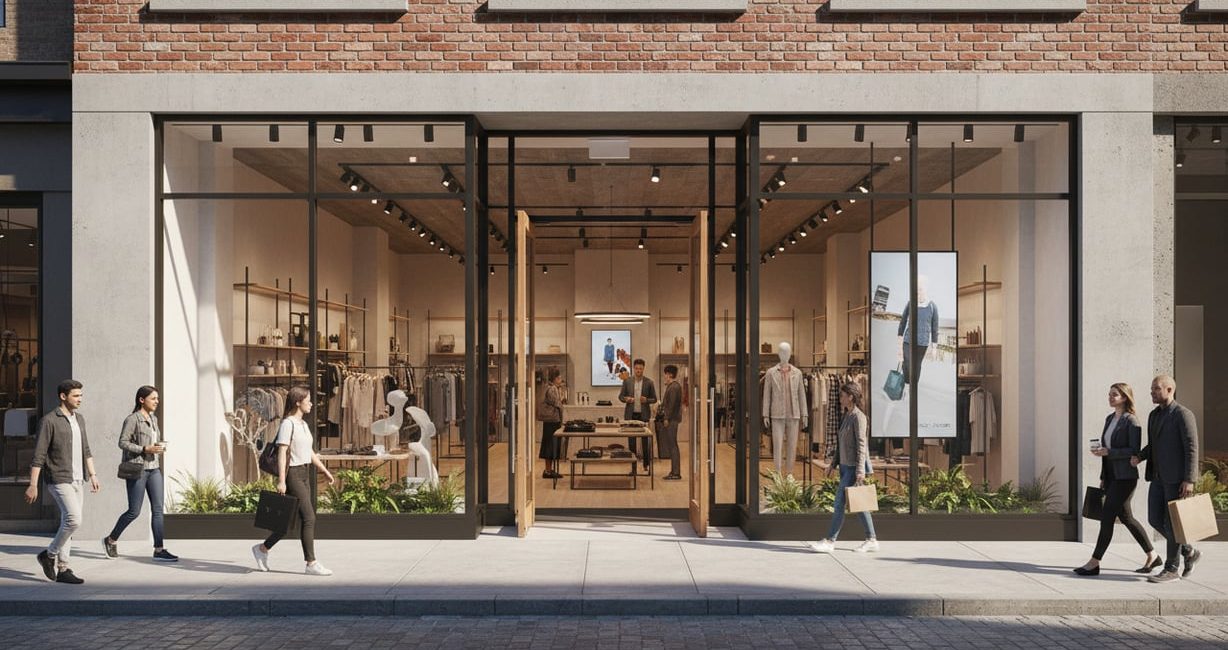
There’s a narrative floating around that physical retail is dying. The data tells a completely different story. Offline shopping frequency across Europe sits somewhere between 69% and 85%, depending on the market. And in fashion specifically, the numbers lean even harder toward in-person: more than 60% of consumers still insist on touching fabric and trying things on before they hand over money. Makes sense, honestly. A screen can’t replicate the weight of a wool coat on your shoulders.
A brick-and-mortar store, at its best, isn’t just a place to buy clothes. It’s where a brand stops being abstract and starts being something people can walk into, feel, and remember.
Why Physical Retail Still Wins in Fashion
Fashion runs on fit and feel — two things no size chart has ever nailed. A well-lit fitting room does more for conversion than any product page ever could.
Think about what a physical store actually solves. Customers try things on, which kills sizing anxiety and slashes return rates. Online fashion returns hover around 20–30%, and every one of those eats into margin. In-store? That number drops dramatically. Then there’s the human element — a sharp sales associate who suggests the right belt or jacket can push the average basket value up in ways that algorithm-driven “you might also like” suggestions rarely match. And of course, people walk out with the product in hand. No tracking numbers, no missed deliveries.
Winning Retail Concepts in Europe
Not every store format works everywhere. But a few models are clearly pulling ahead right now.
Curated Boutiques — Small shops with a tight, cohesive aesthetic continue to carve out loyal customer bases. What high-street chains offer in volume, these stores replace with personality, personal service, and often on-site tailoring. The margins aren’t always fat, but the repeat business is real.
Off-Price Fashion — This is arguably Europe’s fastest-growing retail segment. The model is straightforward: source overstock from premium labels, sell it at 30–70% off. Shoppers love the “treasure hunt” feeling, and retailers love the margin protection. What’s changed recently is access — platforms like Unfrosen now let independent shop owners tap into branded surplus inventory without needing established wholesale relationships. That’s a genuine shift for smaller operators.
Sustainable and Vintage Shops — Circular fashion has gone from niche to mainstream, especially in France, Germany, and Scandinavia. Consignment setups, where you only pay the original seller once the piece actually moves, keep your upfront capital risk low. Smart model for anyone launching without deep pockets.
Pop-up Stores — Temporary retail spaces in cities like Paris, Milan, or Berlin let you test a market or drop a seasonal collection without locking into a multi-year lease. The commitment is low; the data you collect is invaluable.
Starting Your Fashion Store: A Practical Blueprint
Launching in Europe means navigating real competition, complex logistics, and consumers who’ve seen it all. Here’s what actually matters:
Pick a niche and commit. Luxury, activewear, maternity, streetwear — whatever it is, go deep instead of broad. Generalists get crushed by chains with better buying power.
Get your sourcing right. Margins live and die here. Traditional wholesale still works, but plenty of modern wholesale B2B clothing retailers blend in off-price branded stock to protect their bottom line when full-price pieces move slowly. It’s a cushion, not a crutch.
Location matters, but context matters more. Foot traffic alone isn’t the metric. You need relevant foot traffic. A luxury boutique belongs on a premium street; an off-price store thrives in a high-volume commercial zone. Wrong placement, wrong customer — doesn’t matter how good the product is.
Invest in the experience. Lighting, fitting rooms, visual merchandising — these aren’t extras. Your storefront window is doing more marketing work than most of your ad spend. Treat it that way.
Overcoming the Hard Parts
Running fashion retail in Europe comes with specific headaches. Three stand out.
Unsold inventory will sink you faster than anything else. Dead stock is the silent killer. Modern POS systems that track sell-through rates in real time aren’t optional anymore — they’re survival tools. Diversify your sourcing channels so a single failed trend doesn’t wreck your season.
Sustainability isn’t a marketing angle — it’s table stakes. Over 60% of European shoppers now actively prefer brands with credible environmental practices. Transparent sourcing, ethical production, clear communication about where things come from. Skip this and you’re already behind.
Use digital instead of fighting it. A strong Instagram presence paired with “Buy Online, Pick Up In-Store” turns followers into foot traffic. The stores winning right now aren’t choosing between physical and digital — they’re running both engines at once.
The Bottom Line
Physical fashion retail isn’t going anywhere. It’s changing shape, sure — but with European clothing spend projected to reach €1 trillion by 2028, the runway (no pun intended) is long for anyone who gets the fundamentals right.
Blend a memorable in-store experience with sharp inventory management and a digital presence that actually drives people through the door. That’s the formula. Screens can do a lot of things, but they still can’t hand someone a perfectly fitting jacket and watch their face light up.